How to Wear a Tuxedo: The Rules That Still Matter
The short answer: one button, peak or shawl lapel in silk, midnight blue or black, a plain white shirt with a turn-down collar, a black bow tie you tie yourself, and plain black shoes. No belt, no long tie, no shine where it is not silk.
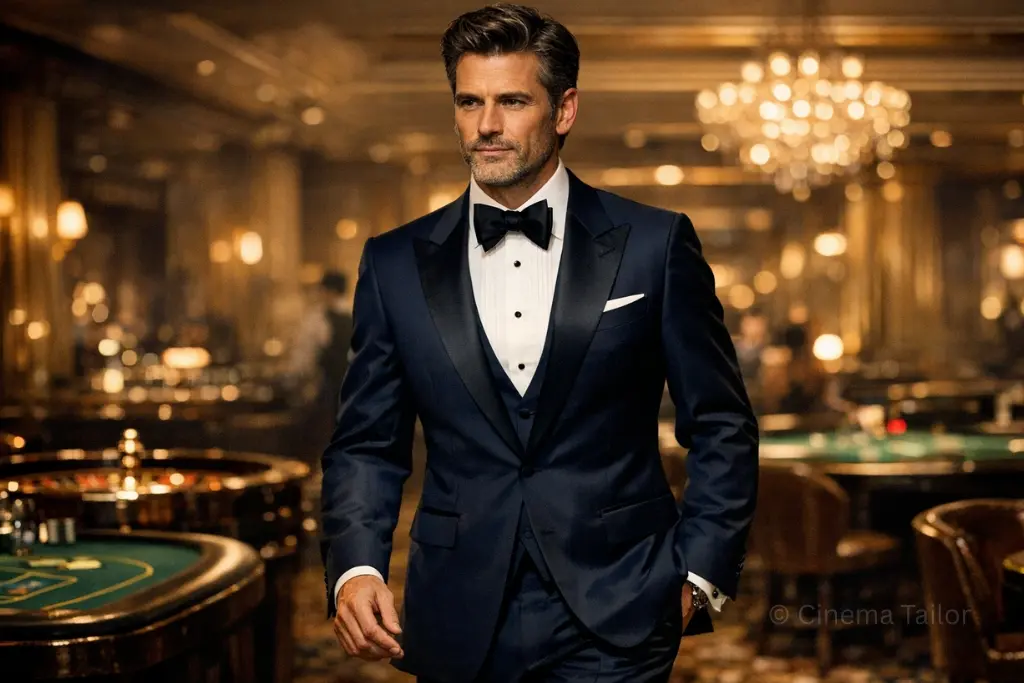
Are you standing in front of your wardrobe, wondering if your best black suit will pass for a black-tie event? Or perhaps you are searching for the secret to looking as commanding as James Bond when he walks into a casino? Most men simply wear a tuxedo, but only a few know how to command a room in one.
When you search for how to wear a tuxedo, you aren’t just looking for a checklist of clothes. You are looking for a transformation. This is not merely a clothing guide; this is about reclaiming your sartorial authority at the most formal level of existence.
Why a Tuxedo is Not Just a Black Suit
| Feature | Tuxedo (The Formal Standard) | Business Suit (The Professional Standard) |
| Lapel Fabric | Finished with Silk or Satin (Shiny) | Same Wool fabric as the jacket (Matte) |
| Buttons | Satin-covered buttons | Plastic, Horn, or Corozo buttons |
| Trouser Detail | Silk/Satin stripe down the leg (Galon) | Belt loops present, no side stripe |
| Shirt Style | Wing collar or Pleated bib shirt | Standard dress shirt or Button-down |
| Primary Use | Black Tie events, Weddings, Galas | Meetings, Daily office wear, Funerals |
The most common mistake men make is treating a tuxedo like a standard business suit. To wear a tuxedo properly, you must understand its architecture. A tuxedo is designed to create a sharp, masculine silhouette that emphasizes the shoulders and slims the waist, creating a “monumental” presence.
James’ Perspective: Why the Tuxedo Rules the Red Carpet
Watching awards ceremonies year after year, I found myself asking a fundamental question: Why is the tuxedo the undisputed uniform for the most significant moments in a man’s life? To answer this, we must look at its origin.
The tuxedo, or ‘dinner jacket,’ emerged in the late 19th century as a relaxed alternative to the stiff tailcoats of the British aristocracy. It was Edward VII, then Prince of Wales, who first sought a shorter, more comfortable jacket for informal dinners. However, it gained its iconic name at New York’s Tuxedo Park Club in 1886, where it became a symbol of a new kind of social authority—one that balanced tradition with modern ease. Today, wearing a tuxedo is not just about following a dress code; it is an act of connecting with a century-old legacy of excellence.
If you want to understand the deeper philosophy of how a suit becomes a leader’s armor, explore our piece on
A Man’s Suit Is His Armor: The Architecture of Authority.
The Architecture of Satin and Wool
The key difference lies in the satin. The lapels, the buttons, and the stripe down the trousers are traditionally faced with silk or grosgrain. This contrast between the matte wool and the shimmering satin is what creates that cinematic “black-tie” glow under evening lights. If you are wearing a plain black suit to a gala, you aren’t just underdressed—you are invisible.
Lessons from the Cinema: Mastering the ‘Bond Look’
When we think of the perfect tuxedo, we think of James Bond. From Sean Connery’s classic elegance to Daniel Craig’s rugged, modern fit, Bond has taught us that a tuxedo is a man’s tactical armor.
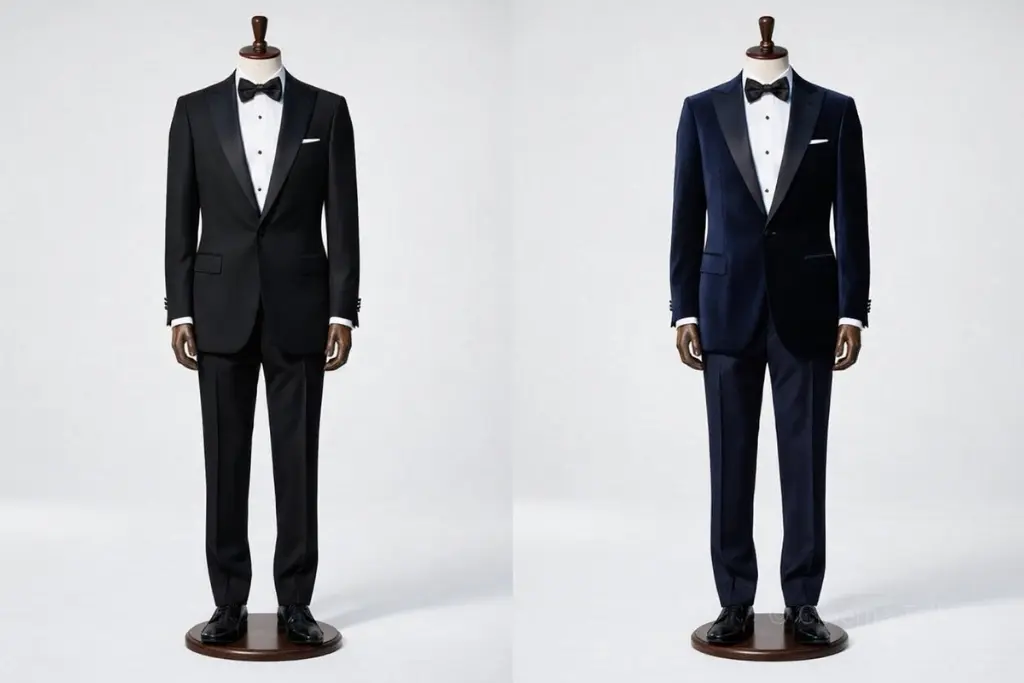
Midnight Blue – The Secret of the Silver Screen
In Casino Royale, when Vesper Lynd gives Bond a bespoke tuxedo, she says, “There are dinner jackets and dinner jackets; this is the latter.” What she meant was fit. To wear a tuxedo like Bond, it must be tailored to your current physique.
For the mature man, a Midnight Blue tuxedo is often a superior choice to pure black. Under artificial light, midnight blue appears “blacker than black” and provides a richer, more expensive texture that complements silver hair and seasoned features.
The Gatsby Grandeur: A Symbol of Achievement
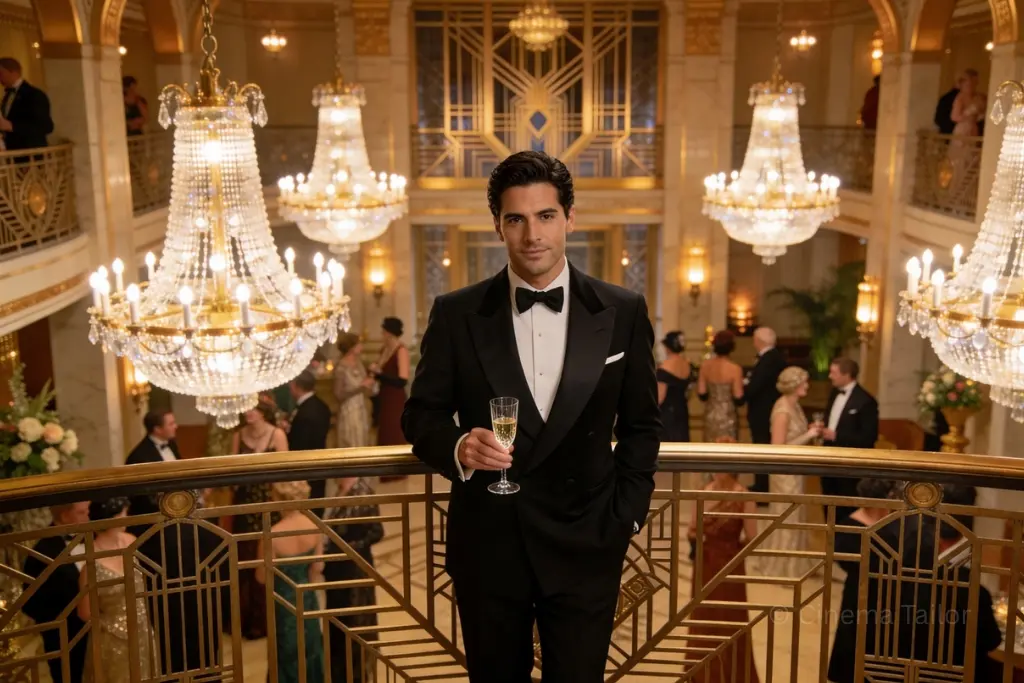
In The Great Gatsby, the tuxedo worn by Leonardo DiCaprio represents the opulence of the Roaring Twenties and the vast ambition of a man who recreated himself. For Jay Gatsby, the tuxedo was not just party attire; it was a visual manifesto of his ultimate success.
The Elegance of the Shawl Lapel
The iconic scene where Gatsby raises his champagne glass reveals the power of the Shawl Lapel. Unlike the sharp aggression of the peak lapel, the shawl lapel offers a “soft charisma.” It emphasizes a smooth, continuous curve that radiates a relaxed yet commanding presence. For a leader at the peak of his career, a Gatsby-style tuxedo says, “I have achieved everything I dreamed of.” It elevates you from being a guest to being the host of the evening.
The Formal Shirt: More Than Just a White Base
The biggest mistake a first-timer makes is wearing a standard office shirt under a tuxedo. A true formal shirt is the engine room of your elegance. It must feature a Piqué or Pleated front—a stiffened panel that prevents the shirt from wrinkling and maintains a sharp, flat chest profile all night.
Furthermore, you must choose your collar wisely. While a classic spread collar is acceptable, a Wing Collar (designed to sit behind the bow tie) is the traditional choice for maximum formality. Most importantly, a tuxedo shirt replaces standard buttons with Studs.
How to ask for it: When you walk into a tailor shop, ask specifically for a “Formal Evening Shirt with a Piqué Front and French Cuffs.” If you want the most traditional look, specify that you need a “Wing Collar shirt with Stud Holes.” Using these precise terms immediately signals that you are a man of authority.
The First Investment: What to Buy and How to Buy It
For the beginner looking to acquire their first tuxedo, the golden rule is: Own, do not rent. A rental tuxedo can never speak for your authority. Your first tuxedo should be an “asset” that remains a lifelong companion.
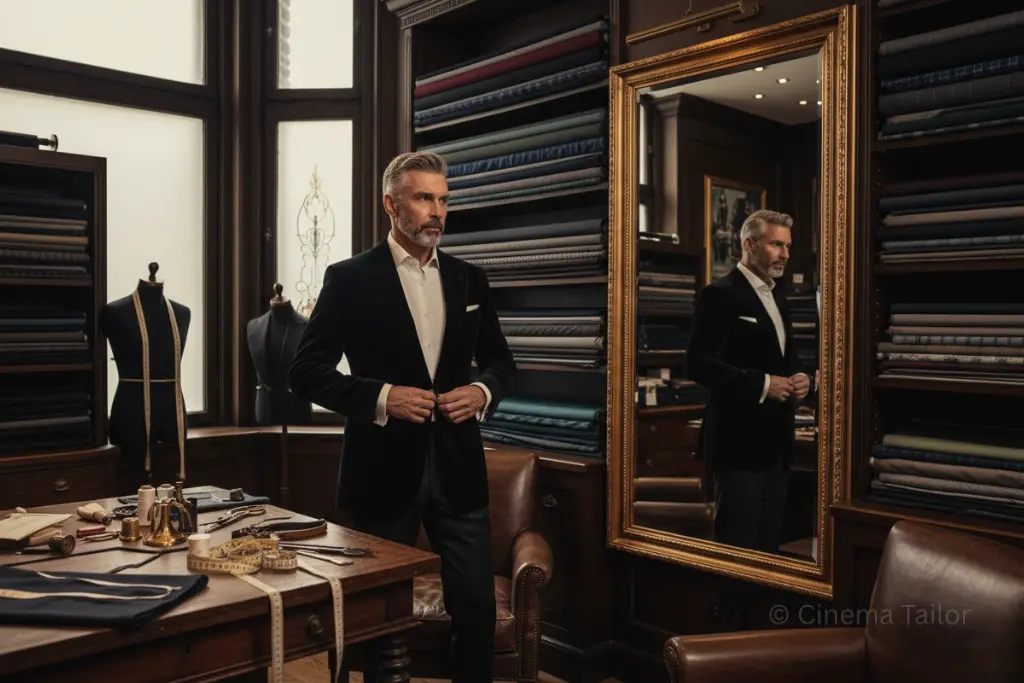
The Essential Starter Kit
Focus on the standards before moving to flamboyant variations:
- The Suit: A single-breasted, one-button jacket with peak lapels and trousers with a single satin stripe down the side.
- The Color: Choose Midnight Blue for high-stakes evening events or Jet Black for universal versatility.
- The Fabric: Opt for 100% high-quality wool. A mid-weight fabric is best for year-round use.
Ownership Over Rental – How to Acquire
- RTW (Ready-to-Wear): Buy a jacket that fits 90% in the shoulders, then take it to a master tailor to adjust the sleeves, waist, and trouser length.
- The Bespoke Advantage: If your budget allows, go bespoke. A garment made specifically for your posture will change the way you stand and move.
- Invest in Quality: Avoid polyester blends at all costs. They create a cheap shine under artificial light that undermines your authority.
The Details That Command Respect: Shirts, Studs, and Bow Ties
The “How to wear a tuxedo” manual is often won or lost in the details. These are the elements that separate the amateurs from the icons.
The Formal Shirt and Metallic Studs
A tuxedo requires a formal shirt with a pleated or piqué front. Avoid standard button-downs. Use studs instead of buttons for a truly polished look. This subtle metallic detail adds a layer of sophistication that standard buttons simply cannot provide.
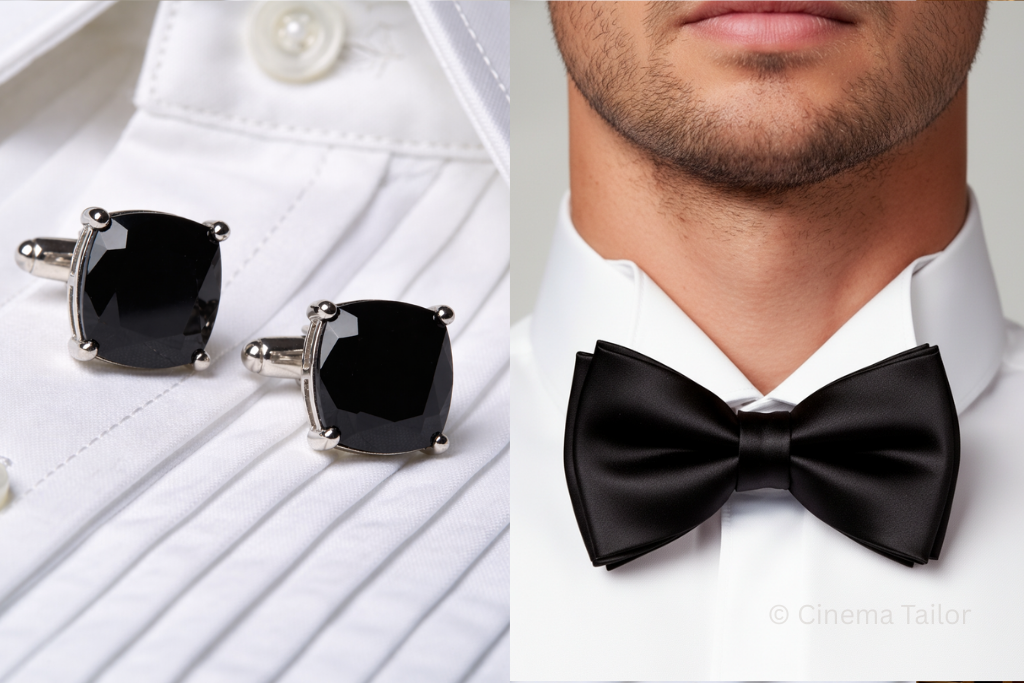
The Bow Tie – A Rite of Passage
Never, under any circumstances, wear a pre-tied clip-on. Learning to tie a real bow tie is a rite of passage. It doesn’t have to be perfect—in fact, a slightly asymmetrical, self-tied bow tie is the mark of a true gentleman.
Footwear – Reflecting Your Confidence
Patent leather is the gold standard. They must be polished to a mirror shine, reflecting the lights of the gala and the absolute confidence of the man wearing them.
The Strategic Fit: How to Wear a Tuxedo for Your Physique
| Body Type | Recommended Style (Do) | Style to Avoid (Don’t) |
| Broad/Heavy Build | 1-Button Jacket + Suspenders | 2+ Buttons + Wearing a Belt |
| Shorter Stature | Peak Lapels + Shorter Jacket Length | Shawl Lapels + Long-line Jackets |
| Sloping Shoulders | Structured Shoulders with Padding | Unstructured/Soft shoulders |
| Slim/Tall Build | Heavier Wool + Double-breasted | Paper-thin fabrics + Ultra-skinny fits |
A tuxedo is not merely a garment; it is a powerful tool for sculpting your body. While a standard suit follows your lines, a tuxedo creates new ones. For a first-timer, the goal is to use the tuxedo’s rigid architecture to mask physical weaknesses and project a “monumental” silhouette. Forget about your age—focus on these strategic adjustments to master the art of visual deception.
The “Midsection” Strategy – Mastering the Belly Camouflage
If you are carrying extra weight around the midsection, your primary enemy is the “horizontal break.” You must create a continuous vertical flow to deceive the observer’s eye.
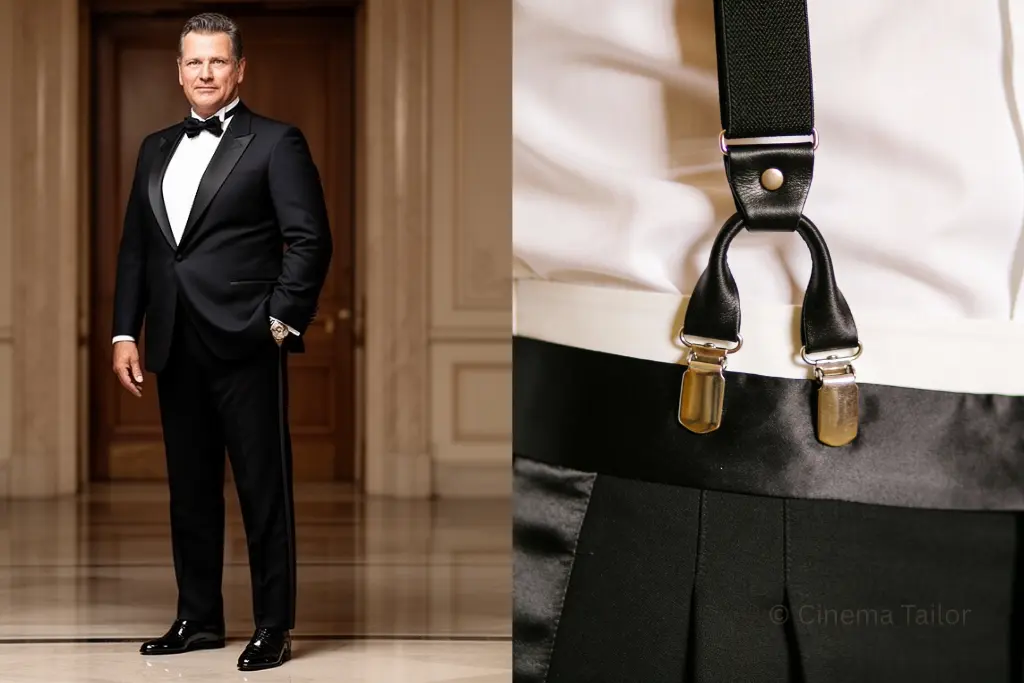
- The Single-Button Maneuver: Never opt for a two-button jacket. A Single-breasted, One-button jacket is non-negotiable. By having only one closure point, the jacket creates a deeper, more dramatic “V” shape. This elongates your chest area and draws the gaze downward in a sharp angle, effectively “cutting” through the visual mass of the belly.
- The Suspender (Braces) Secret: A belt is a disaster for a man with a belly; it acts as a literal equator, highlighting the widest part of your body. Instead, use silk suspenders (braces). They allow your trousers to sit at your natural waist (often higher than where you wear jeans), letting the fabric drape vertically from your torso to your shoes. This creates a clean, straight line that hides the midsection bulge entirely.
- The Cummerbund Trick: If you have a belly, a cummerbund is your best friend. It acts as a sophisticated girdle, smoothing out the transition between your shirt and trousers, ensuring no white shirt fabric “peaks out” from under the jacket button—a common mistake that ruins authority.
The “Vertical” Strategy – Engineering Height for the Shorter Physique
For men who aren’t tall, every horizontal line in your outfit is a “speed bump” for the eye. The objective is an uninterrupted vertical climb from your shoes to your head.
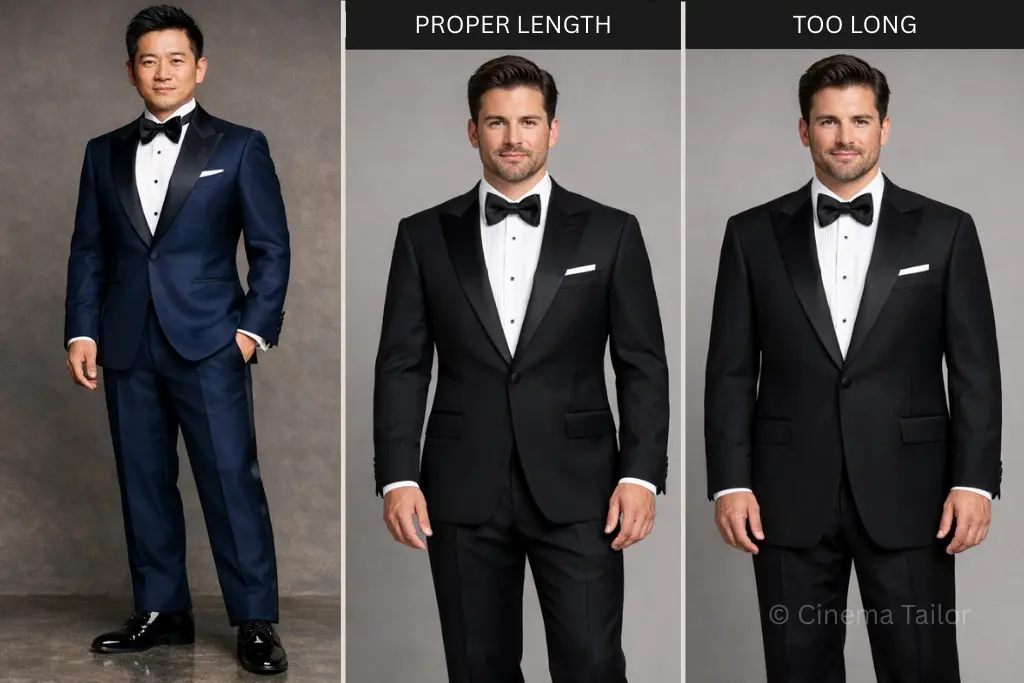
- Peak Lapel vs. Shawl Lapel: While the shawl lapel is classic, it is too “soft” for shorter men. You need the Peak Lapel. The sharp, upward-pointing peaks act like arrows, directing the observer’s eye toward your shoulders and face. This creates an illusion of height and a more athletic V-shape.
- The Jacket Length Formula: A jacket that is even an inch too long will “swallow” your legs and make you look shorter. Ensure the jacket ends exactly where your glutes meet your thighs. By revealing more of the leg line, you instantly add 2–3 inches to your perceived height.
- The Monochromatic Flow: Ensure your trousers and shoes are perfectly matched in tone. Any break at the ankle—such as a trouser that is too long and “pools” over the shoe—will shorten your appearance. Aim for a “No Break” or “Slight Break” at the hem for a razor-sharp vertical silhouette.
The Shoulder Rule – The Uncompromising Foundation of Authority
Regardless of your waistline or height, the shoulders are where the battle for authority is won or lost. The shoulder is the only part of the jacket that is nearly impossible for a tailor to fix perfectly later.
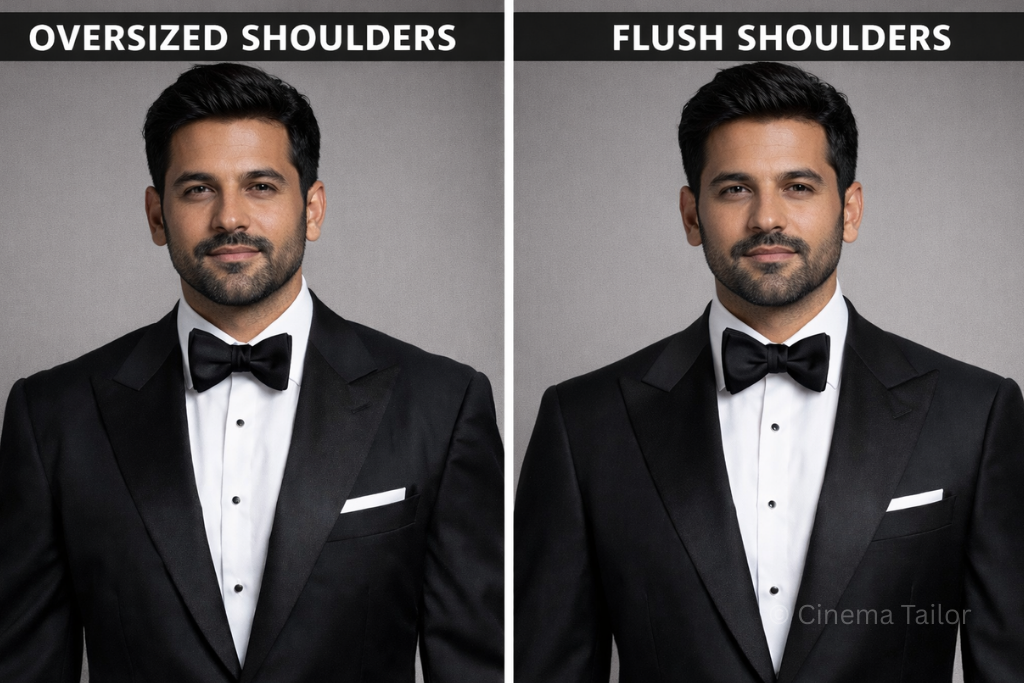
- The 100% Flush Rule: The shoulder seam must end exactly where your natural shoulder ends. If it hangs over, you look like a child in a costume; if it’s too tight, the lapels will “gape” open, making you look uncomfortable and weak.
- Shoulder Padding as a Tool: For men with sloped shoulders, a slightly structured, padded shoulder can add much-needed “squareness” and presence. This structural “lift” changes your entire posture, making you stand taller and look more commanding. If the shoulders are right, the rest of the jacket can be adjusted to fit any waistline, but if the shoulders fail, the tuxedo fails.
Frequently Asked Questions About Tuxedo Etiquette
Q1. Can I wear standard black leather shoes with a tuxedo?
A. Ideally, you should wear patent leather (shiny) or highly polished calfskin opera pumps/oxfords. Avoid loafers, boots, or any shoe with heavy broguing (perforations), as they are too casual for Black Tie.
Q2. Is Midnight Blue appropriate for a summer Black Tie event?
A. Absolutely. Midnight Blue is often considered more formal than black because it looks “blacker than black” under artificial light. For summer, simply choose a lighter weight wool-mohair blend to stay cool.
Q3. Is it acceptable to wear a long necktie instead of a bow tie?
A. For a true Black Tie event, a necktie is considered a breach of etiquette. A bow tie is the defining element of the tuxedo. If you find a bow tie intimidating, opt for a high-quality “self-tie” version to maintain the integrity of the look.
The “Gentleman’s Final Look” Checklist
- [ ] Self-Tied Bow Tie: Does it have that slight, elegant asymmetry that only a hand-tied tie can provide?
- [ ] No Belt Policy: Are you wearing suspenders instead of a belt? (Tuxedo trousers should never have belts).
- [ ] Hosiery Length: Are you wearing over-the-calf black silk hose so no skin shows when you sit?
- [ ] The Pocket Square: Is your white linen square crisp and folded in a clean ‘TV fold’ or ‘Presidential fold’?
- [ ] Consistent Metals: Do your cufflinks, shirt studs, and watch all match in metal tone (e.g., all Silver or all Gold)?
Conclusion: Become the Monument of the Night
As someone who has navigated both the high-stakes boardrooms and the most formal galas, I have learned that a tuxedo is more than just fabric—it is a strategic choice. Wearing a tuxedo is an act of respect—respect for the occasion, respect for your hosts, and most importantly, respect for yourself. When you follow these rules, you aren’t just following a dress code. You are stepping into a cinematic legacy. In a world that celebrates the temporary, choose the permanent. You are no longer just a guest; you are the protagonist. Be the monument.
Frequently asked
Midnight blue or black?
Midnight blue reads blacker than black under artificial light. Either is correct.
Cummerbund or waistcoat?
Either, never both, and always something to cover the waistband.
Can I wear a black suit instead?
It will look like a business suit at a party. If you must, use a black tie and plain shirt and accept the compromise.